

 Free Shipping
 Free Exchanges
 30-Day Return Policy
Are Wide Shoes Wider in the Heel Area?

Finding shoes that fit comfortably can be challenging when different parts of your feet need different amounts of room. For example, you may need a wide shoe to accommodate your forefeet, only to discover that the heel feels too loose. This raises a common question: Are wide shoes wider in the heel area, too?
The answer depends on how the shoe is designed. While many wide-width shoes provide additional room throughout the shoe, others are constructed with a roomy forefoot and a more fitted heel. The shape of the shoe's last and how the manufacturer distributes width throughout the shoe determine whether the heel fits loosely or securely.
Understanding where shoes gain extra width and how manufacturers shape different parts of footwear can help you find a pair that provides enough room in the forefoot without sacrificing a secure heel fit.
Are Wide Shoes Wider Throughout the Entire Shoe?
Wide shoes are generally designed to provide more room than standard-width shoes, particularly around the ball of the foot. However, this doesn't mean every part of a wide shoe increases in width by the same amount.
In many shoe designs, increasing the width also adds room through the midfoot and heel. Other designs focus more of the additional space around the forefoot while keeping the heel relatively snug. These differences depend on the manufacturer's sizing system and the shoe last used to construct the footwear.
For someone with a broad forefoot and a narrower heel, a wider shoe may provide enough room in the front but feel too loose around the heel. This is why choosing a shoe with the right shape can be just as important as selecting the correct width.
How Does Shoe Construction Affect Heel Width?
The shape of a shoe is largely determined by its last. A shoe last is a three-dimensional form used during manufacturing to establish the shoe's shape, including its length, width, toe box, arch area, and heel.
Manufacturers use different lasts to create footwear for various foot shapes and activities. This explains why two shoes from different brands, or even two styles from the same brand, can fit differently despite having identical size and width labels.
Standard Lasts vs. Combination Lasts
Most footwear lasts are designed with specific proportions between the forefoot, midfoot, and heel. When manufacturers produce wider versions of a shoe, they may adjust several areas of the last to create additional room. However, not all shoe designs use the same proportions.
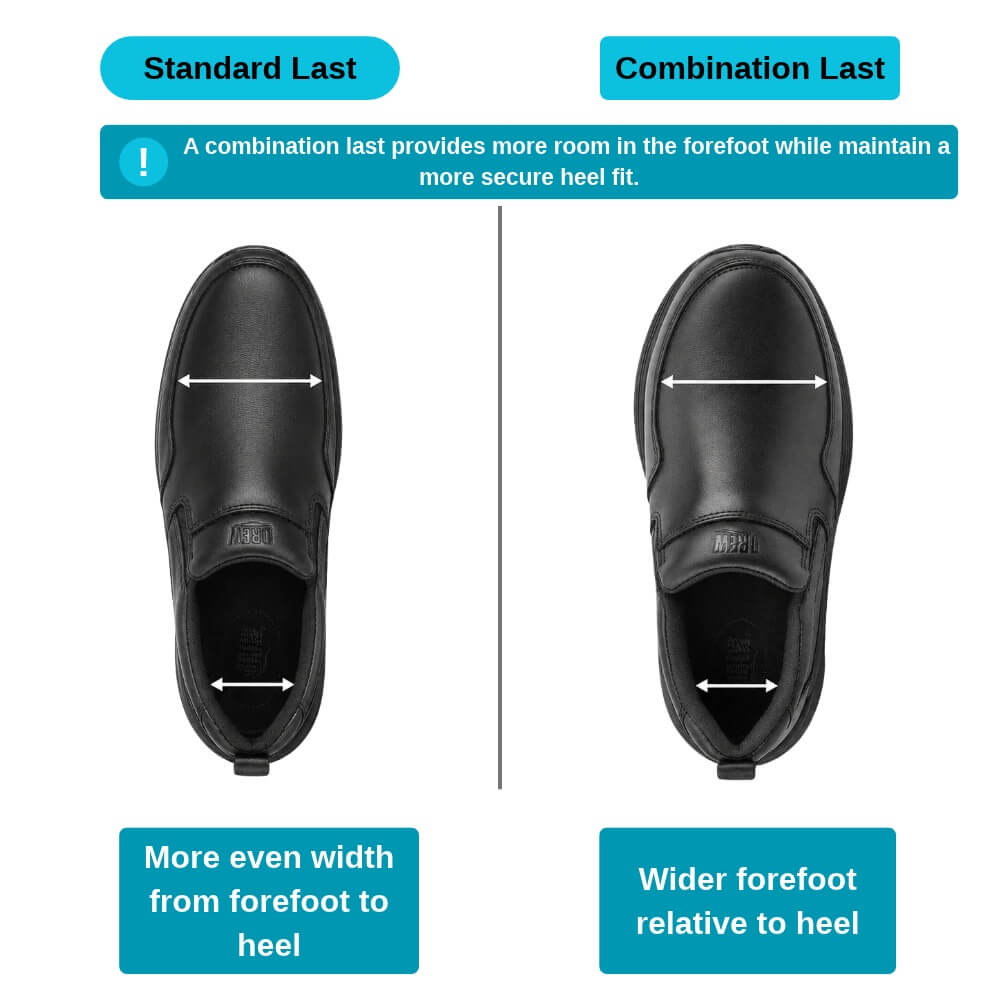
A combination last is designed with a wider forefoot relative to the heel. This construction is especially useful for people who need extra space around the ball of the foot but have a comparatively narrow heel.
For example, a shoe built on a combination last may provide a wide fit across the forefoot while maintaining a narrower heel area than a conventional wide-width shoe. This can help reduce excessive heel movement without crowding the toes.
The Pedorthic Footcare Association defines a combination last as one that uses different width proportions between the ball of the foot and heel. Traditionally, the heel may be two or three width increments narrower than the forefoot.
Not every manufacturer offers combination lasts, and they aren't always identified in product descriptions. However, understanding this feature can help explain why some wide shoes fit more securely around the heel than others.
Why Do Some People Need Wide Shoes with Narrow Heels?
Not everyone's feet have the same proportions. Some people have a broad forefoot with a relatively narrow heel, while others have more uniform width throughout the foot. Having a wide forefoot doesn't necessarily mean the heel is equally wide.
This difference can make choosing shoes challenging. For example, someone with bunions may need additional room around the forefoot but have an otherwise narrow heel. Moving to a wider shoe may provide the necessary space in front while creating excessive room at the back, causing the heel to slip during walking.
This is why selecting shoes based on forefoot width alone doesn't always provide the best fit. For people with a broad forefoot and narrow heel, shoes with a roomy forefoot, a more contoured heel area, and adjustable closures may offer a better fit than simply choosing a wider width.
What Problems Can a Loose Heel Cause?
A shoe that is too wide around the heel may allow the foot to move excessively during walking. This can create an uncomfortable fit, particularly when climbing stairs, walking uphill, or changing direction.
Common signs of a loose heel include:
- Heel Slippage: The heel lifts noticeably inside the shoe with each step.
- Excessive Foot Movement: Your foot slides forward or shifts inside the shoe while walking.
- Heel Rubbing: Repeated movement creates friction against the heel lining.
- Loose-Fitting Collars: There are noticeable gaps around the back or sides of the heel opening.
- Overtightened Laces: You need to pull the laces unusually tight to prevent your foot from moving.
A small amount of heel movement may occur in certain footwear styles, especially during the break-in period. However, repeated slipping or rubbing can indicate that the shoe isn't well matched to your foot shape.
Are Wide Toe Box Shoes the Same as Wide-Width Shoes?
Wide toe box shoes and wide-width shoes are often confused, but they aren't necessarily the same.
A wide toe box shoe is designed to provide additional space around the toes, allowing them to spread more naturally. Depending on the design, the shoe may still have a relatively narrow midfoot and heel.
A wide-width shoe is made to fit a broader foot measurement, generally across the ball of the foot. It may also provide additional room in other areas, although the exact proportions depend on the shoe's last.
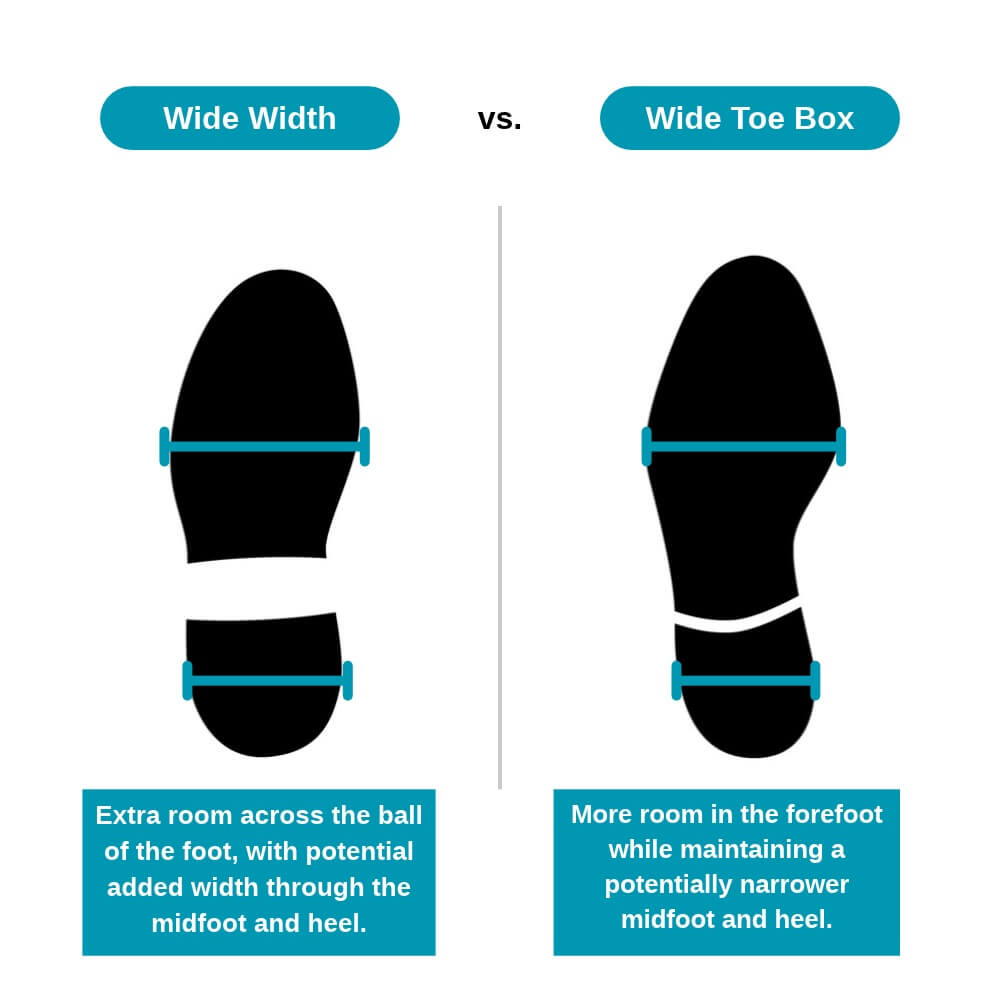
For example, someone who needs more room at the forefoot but has an otherwise average-width foot may find that a standard-width shoe with a wide toe box provides enough space without needing to move to a wider width. On the other hand, someone whose entire foot is broad may need a wide-width shoe rather than a standard-width style with a roomy toe box.
The shape of the toe box also matters. Some shoes have tapered fronts that narrow toward the toes, while others have a rounder or more anatomical shape. Two shoes with the same width designation may therefore provide very different amounts of toe room.
If you have a wide forefoot and narrow heel, look for footwear that combines generous forefoot space with a secure heel fit rather than assuming that any shoe labeled wide will provide the right proportions.
How Do You Choose Wide Shoes That Fit Securely Around the Heel?
Finding the right wide shoes involves more than selecting the correct width designation. The goal is to provide enough space where your foot needs it while maintaining a comfortable, secure fit around the midfoot and heel.
When choosing shoes for fit, consider these features:
- Shoe Last Shape: Look for shoes with a roomy forefoot and a contoured heel. Combination lasts may be particularly useful for people with wide forefeet and narrow heels.
- Proper Width: Choose a width that accommodates the ball of your foot without squeezing the sides. Avoid sizing up in length simply to gain additional width.
- Adjustable Closures: Traditional laces or adjustable straps allow you to secure the midfoot and improve the fit without changing the shoe's overall width.
- Adequate Toe Room: Make sure the toe box provides enough space without forcing your toes together. A roomy toe box doesn't have to mean a loose-fitting heel.
When trying on shoes, check the fit while standing and walking rather than relying on how they feel when seated. Your heel should remain comfortably positioned inside the shoe, and your foot shouldn't slide excessively forward or backward. If the forefoot feels comfortable but the heel slips, consider trying another style or last shape before changing sizes.
It's also worth remembering that shoes made by different manufacturers may fit differently, even when they share the same size and width. Comparing several styles can help you find footwear that matches the proportions of your feet rather than relying on the width label alone.
If you find a shoe that fits comfortably in the forefoot but feels slightly loose around the heel, adhesive heel pads or grips may help reduce slippage. These pads attach to the inside back of the shoe to take up a small amount of extra space. However, they're intended for minor fit adjustments and shouldn't be used to compensate for shoes that are significantly too wide in the heel.
Conclusion
Wide shoes aren't necessarily wider by the same amount throughout the entire shoe. While some designs provide additional room across the forefoot, midfoot, and heel, others use different proportions to accommodate a wider forefoot while maintaining a more secure heel fit.
The shoe's last, overall shape, and closure system all influence how it fits. For people with wide forefeet and narrow heels, these features can make an important difference in everyday comfort.
When choosing wide shoes, focus on how the footwear fits your entire foot rather than relying on the width designation alone. The right pair should provide enough room across the toes and ball of the foot while keeping the heel securely positioned during walking.
About author:
Derek Roach is a foot health expert with over a decade of experience in the orthopedic shoe industry. He has helped thousands of customers find the right footwear for their unique foot conditions. His expertise has been featured in major publications such as CNN, Women's Health Mag, HuffPost, and Healthline. Passionate about foot health and comfort, Derek provides practical advice to help people improve mobility and reduce foot pain through proper footwear choices.
